

Showing posts with label pipe welding. Show all posts
Wednesday, October 23, 2019
Renting Welding Systems Can Be a Profitable Solution
Welding
is required at some point in time and while they are many types to choose from,
it’s not always easy to own one. The perfect solution is to be able rent or
hire the best and latest welding equipment, use it and return it once the job
is complete.
Flexibility
Being
able to rent welding equipment offers a number of flexible
options that will depend on the type of machinery required, costs and the job
at hand. Rental solutions always provide equipment that is well maintained and
in optimum working condition, so there isn’t any room for failure. It also
enables you to get as many or as few equipment as needed. Many rental services
provide standardized or customized welding machines to use in home projects
like pipe welding or for large scale
constructions. Most welding rentals try to maintain a close proximity to their
target customers. The user can decide how long he would like to keep the
machines and work within his budget. All equipment is safe, quality tested and
regulated and can be used immediately.
Cost Effective
With renting of
welding equipment, you can be assured that all the machinery is up to date and
well maintained with the latest technology. Since most machines are only used
for less than 60% of their capacity, renting one is a more economic option.
Like all machines, welding equipment also gets constantly updated and that
means users can get to rent the best in the business without having to rely on
old, out dated machinery that needs regular repairs and maintenance. Business
owners also save on storage, handling and shipping costs and many welding
rental companies help to sell old equipment. Welding packages needed for pipe welding or any other welding jobs will include
necessary accessories such as cables, TIG torches and gas hoses. Renting
equipment also helps to save on taxes and depreciating assets and it comes with
a full warranty and replacement at no extra cost in the case of a breakdown.
Wednesday, January 9, 2019
These Tips can help you Choose the Right Pipe Welding Machine
Welding is a process of fabrication, which aids in
joining materials including pipes, metals, thermoplastics and more by using
high heat. The heat thus produced melts the different parts together and causes
fusion between the materials. The same holds for pipe welding, which in turn
necessitates the need to select the best pipe welding machines. Mentioned here are a few tips that will help find the
perfect equipment.
- Consider the Kind of Metal: Typically, most welding jobs are performed on carbon steel as it withstands a high amount of heat and hence supports most welding equipment found in the market. Stainless steel resists corrosion while aluminum needs consistent heat to make sure that the weld pool does not dry out. Therefore, it’s a good idea to assess the kind of metal that you would be working with.
- The Ideal Site: The workspace is an essential factor to consider when buying machine for pipe welding. For example, many domestic facilities have about 115-220 volts supply of power. So, you would want to get a machine that works accordingly. Furthermore, some powerful welders need three-phase power supply, which is also an important factor to consider.
- Pick the Appropriate Amperage: Ideally, the price of the welding machine would depend on the amount of power it produces. To work on thicker metals, you would require more current. For example, a pipe having thickness of one inch would demand a stick welding machine. Hence, you would need to assess your needs before making a purchase.
- The Specs Sheet: Reading the specs sheet is also rather important. It would help you in knowing many important things, which can further aid in decision-making. Upon reading the specs sheet, you would be able to find out how well the pipe welding machine can perform in a given period. The duty cycle tells the number of minutes that the machine can weld out of 10 minutes (in many cases). Your machine might undergo damage if you continue to use it beyond its duty cycle rating.
To
know more about selecting the best Pipe welding machine, feel free to browse
through the official website of Red-D-Arc.
Thursday, September 21, 2017
Machines That Enhance the Process of Orbital Welding
Welding is the most popular and affordable way of joining two metal pieces, which finds heavy use in merging pipe sections. That particular way of fusing the pipes is known as pipe welding which makes them all the more sturdy. But these manual processes do have some errors which call for concern in order to produce flawless works. With the progress of technology, the industry introduces new methods and devices that require less time to serve proper purposes; orbital welding is one of them.
This specific welding method requires the arc to mechanically rotate around a pipe (a workpiece which is static) continuously. The rotation takes place in form 360 degree i.e. doubled up welding of 180 degrees. Orbital welding is actually a computer-based process apt for high-quality welding, which is done repeatedly and requires very little participation of the operator. It was originally devised to do away with the errors that the operators made during GTAW or Gas Tungsten Arc Welding Process. However, these processes render powerless without proper machines. Hence, you should also have knowledge about the machine, which is apt to help you attain the deliverables.
Knowing the machines
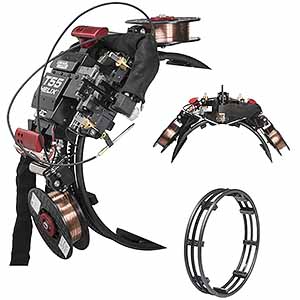
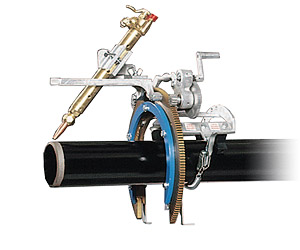
In order to prepare a pipe for its welding process, you will require pipe beveling machine, usually found with a pneumatic or electrical drive. Depending on the pipe type and the job that needs to be done, this beveling machine can be of various forms. Two most popular types are saddle-type and H&M band-type, which are available come with their own specialties. The former one comprises hard-anodized and lightweight aluminum and is suitable for beveling and cutting 2" to 12" diameter's pipe. Likewise, the latter one is also lightweight with a compact design and its cut ranges from 10" to 96" diameters of pipes.
Thus, you can understand that you are spoilt with choices if you want to go for welding. Just remember, to opt for an advanced orbital welding system that serves your work easily and effortlessly. Once you choose the right machine, you can end up making your welding work a cakewalk.
Saturday, August 27, 2016
Accurate & Versatile Bevelers for the Pipe Welding Industry
Pipe beveling, also known as pipe cutting and pipe profiling, refers to the mechanical industrial process designed for the specific profile of the pipe. This process forms a 37.5 degree angle for welding between the edge of the end of the pipe and a plane perpendicular to the surface. The use of the bevel is to soften the edge of the pipe piece in order to maintain security and wear resistance to facilitate joining with another piece.
The profile of pipe cutting is organized to maximize the fitting between two parts of the pipe. The complex cut includes straight cuts, miters, saddles and mid-section holes. The final goal of the cut is to prepare the pipe to join permanently with the help of arc welding.
The Function of Pipe Beveling Machines
The pipe beveling machines perform the cut by using a plasma or oxy-fuel thermal torch. This generates a direct flow of plasma in the jet, which further helps in the process of cutting, spraying or arc waste disposal. Pure oxygen is better than ordinary air because it can reach a much higher temperature. Acetylene is the most commonly used fuel in this process. Although is accompanies certain handling problems, it has the advantage over other fuels due to its high heat output.
The profile of pipe cutting is organized to maximize the fitting between two parts of the pipe. The complex cut includes straight cuts, miters, saddles and mid-section holes. The final goal of the cut is to prepare the pipe to join permanently with the help of arc welding.
The Function of Pipe Beveling Machines
The pipe beveling machines perform the cut by using a plasma or oxy-fuel thermal torch. This generates a direct flow of plasma in the jet, which further helps in the process of cutting, spraying or arc waste disposal. Pure oxygen is better than ordinary air because it can reach a much higher temperature. Acetylene is the most commonly used fuel in this process. Although is accompanies certain handling problems, it has the advantage over other fuels due to its high heat output.
The basic procedure of pipe beveling includes:
- Joint Preparation
- Root Weld
- Fill and Cap
- Testing
Pipe Beveler Tools
The tools used in the process of pipe beveling are as follows:
- Pipe Alignment & Reforming Clamps
- Pipe decent & Flange apparatus
- Hoist, Lifts + Cranes
- Generators & illumination
High tech pipe beveling tools are simpler to use compared to grinding tools. These tools help reduce the work load and aggravation associated with the process. Certified pipe tools can enhance productivity on the job site while providing accurate and efficient output.
The pneumatic high powered saws come in handy in various situations, such as in removing boiler panels. With the selection of the appropriate tool the individual work safely. The bolt tools can also convene the requirement of various applications and hold a widespread application in multiple industries.
Reason for automated pipe beveling
- Low operating cost, uses mostly industry standard carbide tooling.
- Eliminates ergonomic issues from operator handling hand tools.
- No more dirty operations such as hand grinding or torching.
Wednesday, October 22, 2014
Pipe Welding and Filler Metal Considerations
The pipeline industry and pipe
metallurgy has evolved over time, giving rise to a great demand for welding
processes and products. For this purpose, many multipurpose welding machines
with multi process capabilities have been developed with inverter based engine
drives. One of the key factors that welders need to determine in welding
process pipe is which wires provide the best results for every weld pass. They
also need to select the highest quality filler metal. Process piping has its
unique requirements and challenges where welders need to comply with strict
codes and take precautions to eliminate the risk of defects that could
compromise weld integrity. Some welders have moved from gas tungsten arc
welding to wire processes. Technologies such as pulsed gas metal arc welding
(GMAW-P) have the capacity to increase production and produce the highest
quality welds in process pipe applications. One of the major tasks of the
welder is to choose the right filler metal.
Types of filler metals
Carbon steel in diameters
from 4 to 36 inches is widely used in process piping applications. For the
semiautomatic process, the most common diameter is 18 inches or smaller. The
filler metal wire options in such applications are solid wire; metal cored
wire; and gas shielded flux cored wire. Each type of wire has its unique
features and benefits, which must be considered prior to selecting a filler
metal for the job. Solid wire is one of the most popular choices since a
greater amount of filler metals goes into the weld joint when compared with
SMAW electrodes. On the other hand, to speed productivity on process pipe welding applications that use SMAW or GTAW, tubular gas shielded flux cored
wire is an ideal alternative. They meet industry mechanical properties such as
high strength and side-wall fusion to help reduce weld defects. Metal cored
wires, like solid wires can be used with a modified short circuit GMAW process,
and allows welders to standardize one wire and gas for the entire application.